
Toothman Orthodontics explores how advances in digital scanning, 3D imaging, treatment planning, and in-house technology are changing the patient experience.
Maybe you still remember the impression tray: a mouthful of cold, goopy material, a timer, and a fight with your gag reflex. Maybe your child is about to start treatment, and you are counting how many school pickups and work absences the next year could cost.
Or maybe you have seen an ad promising braces in half the time and want to know whether any of it is real.
Those are fair questions, and we hear them often. Our family has been straightening smiles in Hagerstown since 1977. The goal has not changed in all those years, but the tools have. Today, Dr. Jeffrey Toothman plans treatment with digital scans, 3D imaging, and 3D printers inside our own offices.
This article explains what that technology actually does, where it makes treatment faster and more comfortable, and where the honest answer is still "that part depends on you."
What Technology Do Orthodontists Use Today?
Modern orthodontic offices run on a digital workflow. Instead of plaster models on a shelf, your records live as 3D files that can be measured, planned, and printed.
At our offices in Hagerstown and Frederick, that workflow comes down to four steps.
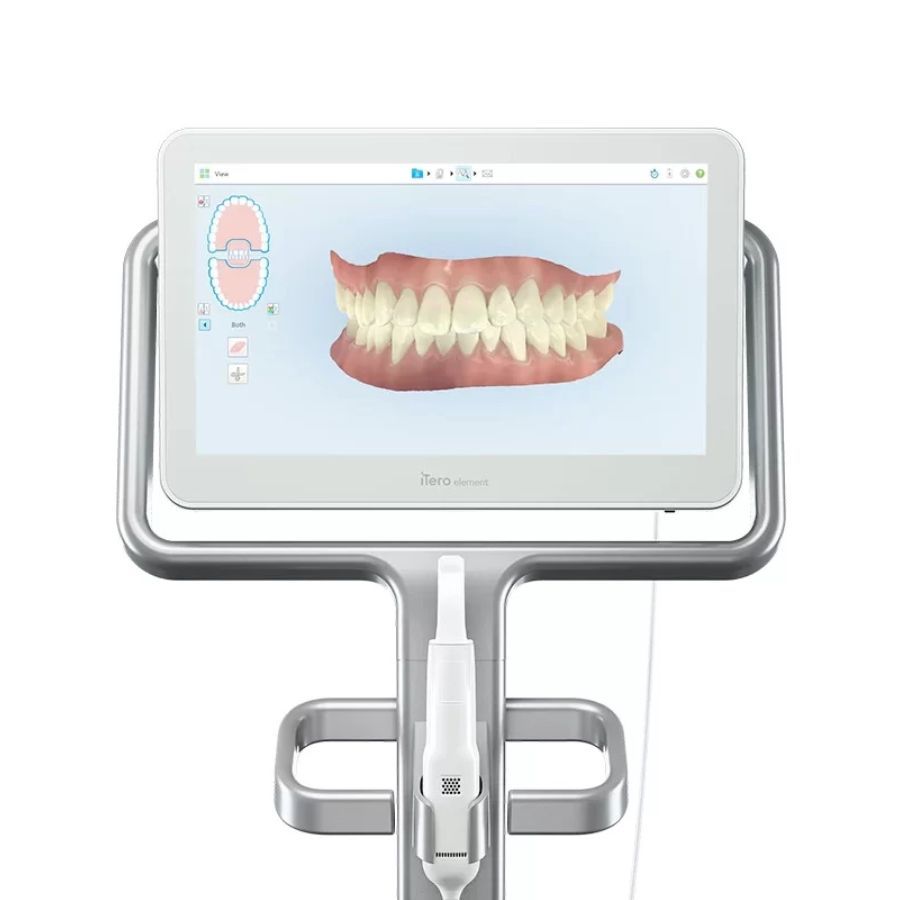
Scan. An iTero scanner captures your teeth and gums as a detailed 3D model in minutes, with no impression material.
See. Cone beam 3D imaging shows roots, bone, the airway, and the jaw joints when a case calls for a closer look.
Plan. Planning software maps each tooth movement on screen, so you can preview your expected result before treatment starts.
Print. In-house 3D printers turn that plan into aligners and appliances without shipping anything to an outside lab.
Each step removes a place where treatment used to slow down, whether that was a retake, a guess, or a week of waiting on the mail.
How Does Digital Scanning Make Treatment More Comfortable?
For most patients, the scanner is the first piece of technology they notice. A small wand passes over the teeth while a 3D model builds on the screen beside the chair. There is no tray to hold in place and nothing to set.
That matters most for anyone with a strong gag reflex, sensitive teeth, or a nervous child in the chair. It also matters for accuracy, because a digital model does not tear, bubble, or warp on its way to a lab.
A saved scan can also be compared with later scans to show exactly how teeth have moved over time, which turns progress checks into something you can see.
What Does 3D Imaging Show That a Regular X-Ray Cannot?
A standard dental x-ray is flat. It shows teeth from one angle, and structures can overlap. Cone beam 3D imaging captures the teeth, roots, bone, airway, and jaw joints in a single scan that takes about five seconds.
That view is especially useful for impacted teeth, such as canines that have not come in, for complex bite corrections, and for patients with jaw symptoms. It shows where a root sits in the bone before we ask it to move.
More imaging is not automatically better. The American Dental Association (ADA) recommends that x-rays, and 3D scans in particular, be ordered only when the added information will help a patient, and that principle belongs in every orthodontic plan.
Dr. Toothman also completed a two-year fellowship in temporomandibular joint (TMJ) dysfunction and orofacial pain. When a 3D image includes the jaw joints, he knows exactly what to look for.
How Does Digital Treatment Planning Work for Braces and Invisalign?
Treatment planning is where technology earns its keep. Once your records are digital, tooth movements can be mapped, measured, and adjusted on screen before anything touches your teeth.
For Invisalign treatment planning, your scan feeds 3D software that stages every movement, tray by tray. Dr. Toothman reviews and refines that plan before a single aligner is made, and you can see a preview of your expected result at the start.
Braces treatment planning benefits too. Digital models and 3D imaging show crowding, root positions, and how the upper and lower teeth meet from every angle, which helps us anticipate difficult movements early.
A preview is a plan, not a promise. Teeth are living tissue, and small adjustments along the way are normal. What planning does is replace guesswork with measurements, so there are fewer surprises in month ten.
What Does In-House 3D Printing Change?
For years, most aligners and many orthodontic appliances were made by outside labs. Every order meant shipping time, and every correction meant another round trip.
Our offices print in-house. QUEUE aligners, our own clear aligner system, are planned from iTero scans in uLab software and printed on SprintRay 3D printers in Hagerstown and Frederick. Dr. Toothman personally plans and oversees every case.
QUEUE aligners are built for minor to moderate corrections, such as spacing, mild crowding, or teeth that shifted after braces. Making them on site shortens turnaround and removes third-party lab fees, which helps keep monthly payments lower.Printing on site helps with small moments, too. When an appliance needs a remake or a tray needs replacing, the printer is down the hall, not across the country.
Can Technology Really Make Orthodontic Treatment Faster?
Yes and no, and the difference matters.
Technology makes the process faster. Scans take minutes, plans are built before treatment starts, appliances come off a printer instead of a delivery truck, and fewer steps need to be redone. Those savings add up across a whole treatment.
Technology does not speed up bone remodeling. Teeth move as the bone around them reshapes, and that biological pace has limits. A Cochrane review of 23 studies found no reliable evidence that vibration devices shorten treatment, and only very low certainty evidence for light-based devices.
So when an ad promises braces in half the time, ask what is being measured. The honest version of faster orthodontics is fewer delays, fewer do-overs, and a plan that moves teeth efficiently from day one.
| Before Digital Tools | With Digital Tools | |
|---|---|---|
| Records | Impression trays and plaster models | A 3D scan in minutes, stored digitally |
| Imaging | Flat x-rays from one angle | Cone beam 3D views of roots, bone, and joints when needed |
| Planning | Estimated from models and experience | Mapped tooth by tooth on screen, with a preview |
| Appliances | Shipped to and from an outside lab | Many printed in-house, including QUEUE aligners |
| What sets the pace | Biology and follow-through | Still biology and follow-through |
What Still Depends on You?
The best plan only works if it is followed. With aligners, that means wearing trays 20 to 22 hours a day and switching on schedule. With braces, it means wearing elastics as directed, protecting brackets from hard and sticky foods, and keeping appointments.
In our experience, when treatment runs longer than planned, the cause is rarely the technology. It is usually missed wear time, repeated repairs, or rescheduled visits.
Healthy teeth and gums matter too. Plaque left around brackets or under trays can lead to white spots and swollen gums, which can slow treatment down.
Does Advanced Technology Make Treatment Cost More?
Not necessarily, and in some cases it helps lower costs. Because QUEUE aligners are made in our own offices, there is no outside lab markup built into the price.
Your exact fee depends on your case and the appliance that fits it, and you will hear that number at your free consultation. Our financing options include no-interest plans and low down payments, with discounts for paying in full, for multiple family members, and for military families.
We accept most insurance plans, and our team will help you put your orthodontic benefits to work.
Digital Orthodontics Close to Home in Hagerstown and Frederick
Both of our offices are fully equipped with the same digital tools, whether you visit our Hagerstown office at 81 N Edgewood Drive or our Frederick office at 5100 Buckeystown Pike.
For busy families across Washington County and Frederick County, quicker and more predictable visits mean fewer early dismissals from school and fewer hours away from work. If getting to the office is the hard part, ask about starting with a virtual consultation.
Why Families Choose Toothman Orthodontics
- Fully digital offices. iTero scanning, cone beam 3D imaging, and in-house 3D printing at both Hagerstown and Frederick.
- Our own aligner system. QUEUE aligners are designed and printed on-site for minor to moderate corrections, with faster turnaround and no third-party lab fees.
- Platinum Invisalign provider. Our Invisalign treatment planning is backed by hundreds of aligner cases.
- Nearly 50 years of family care. A father-and-son practice serving Maryland since 1977, now caring for generations of the same families.
- Advanced training. An orthodontic residency at the University of Rochester plus a two-year fellowship in TMJ dysfunction and orofacial pain.
- Every option under one roof. Braces, Invisalign, and QUEUE aligners, so the recommendation fits your case instead of a single appliance.
- Accessible care. Free consultations, no-interest financing, low down payments, and help maximizing your insurance benefits.
Frequently Asked Questions About Orthodontic Technology
Does an iTero scan use radiation?
No. An intraoral scanner like iTero uses light to capture images of the teeth and gums, not x-rays. That makes it comfortable and safe for children, teens, and adults alike, and it can be repeated as often as treatment requires.
Is cone beam 3D imaging safe?
Cone beam imaging uses radiation, so it should be ordered only when the added detail will help diagnosis or planning. The ADA recommends careful, case-by-case use, especially for children. When a 3D scan is needed, it reveals root, bone, and joint details that can change a plan.
Can I see what my smile will look like before treatment starts?
In many cases, yes. After your iTero scan, planning software can show a preview of your expected result, and for Invisalign and QUEUE aligners, it maps each stage of movement. Think of the preview as the goal, with small refinements along the way being normal.
Is digital treatment planning only for aligners?
No. Digital scans and 3D imaging also help plan braces. They show crowding, root positions, and how the upper and lower teeth fit together from every angle, which helps Dr. Toothman choose the right appliance and anticipate harder movements before treatment begins.
Do devices that claim to speed up braces actually work?
So far, the evidence is weak. A Cochrane review found no reliable proof that vibration devices shorten treatment and only very low certainty evidence for light-based devices. The dependable ways to finish on time are a precise plan, consistent wear, healthy gums, and kept appointments.
Sources
- Bosoni, C., Nieri, M., Franceschi, D., Souki, B. Q., Franchi, L., and Giuntini, V. (2023). Comparison between digital and conventional impression techniques in children on preference, time and comfort: A crossover randomized controlled trial. Orthodontics and Craniofacial Research, 26(4), 585 to 590. https:/
/ doi. org/ 10. 1111/ ocr. 12648 - El-Angbawi, A., McIntyre, G., Fleming, P. S., and Bearn, D. (2023). Non-surgical adjunctive interventions for accelerating tooth movement in patients undergoing orthodontic treatment. Cochrane Database of Systematic Reviews, CD010887. https:/
/ doi. org/ 10. 1002/ 14651858. CD010887. pub3 - American Dental Association. X-Rays/Radiographs. https:/
/ www. ada. org/ resources/ ada- library/ oral- health- topics/ x- rays- radiographs