
Traditional Braces At Toothman Orthodontics: What Should You Expect?
Discover why traditional braces are a reliable option for patients of all ages at Toothman Orthodontics and what you can expect during treatment.
Table Of Contents
- Introduction
- Meet Dr. Jeffrey Toothman
- What Traditional Braces Are And How They Work
- Why Traditional Braces Remain A Trusted Choice
- Who Is A Good Candidate For Traditional Braces?
- The Treatment Timeline: What To Expect From Start To Finish
- What Your First Few Weeks In Braces Will Feel Like
- Foods To Enjoy And Foods To Avoid During Treatment
- Caring For Your Braces Every Day
- How To Handle Small Issues If They Come Up
- Our Top Picks For A Smooth Treatment Experience
- Why Maryland Families Have Trusted Toothman Orthodontics Since 1977
- Conclusion
- Frequently Asked Questions
Introduction
Traditional braces have been helping people straighten their smiles for decades, and for good reason.
They work consistently. They handle a wide range of cases. And modern braces are more comfortable and more refined than ever before.
If you or your child is considering traditional braces, you probably have questions. What does treatment actually feel like? How long does it take? What are the first few weeks really like?
At Toothman Orthodontics, we have been answering those questions for Maryland families since 1977. Dr. Jeffrey Toothman carries on a legacy his father began nearly 50 years ago, bringing the same care, expertise, and commitment to excellence that has shaped our practice across generations.
This blog walks you through everything you need to know about traditional braces at Toothman Orthodontics, from how they work to what each stage of treatment actually looks like.
Every smile has a story. We are honored to be part of yours.
Meet Dr. Jeffrey Toothman
Toothman Orthodontics is built on a legacy of excellence that has served Maryland families for more than 45 years.
Dr. Jeffrey Toothman continues the practice his father founded in 1977, bringing decades of specialty experience and a genuine love for orthodontics to every patient he treats.
As a Platinum Invisalign Provider, Dr. Toothman also ranks among the most experienced aligner clinicians in the region. That distinction reflects both his extensive case experience and his commitment to offering patients the most effective treatment options available today.
What patients consistently share about Dr. Toothman is that he takes the time to listen, explains things clearly, and builds treatment plans tailored to each patient.
With offices in Frederick and Hagerstown, our team is ready to serve patients across Maryland.
What Traditional Braces Are And How They Work
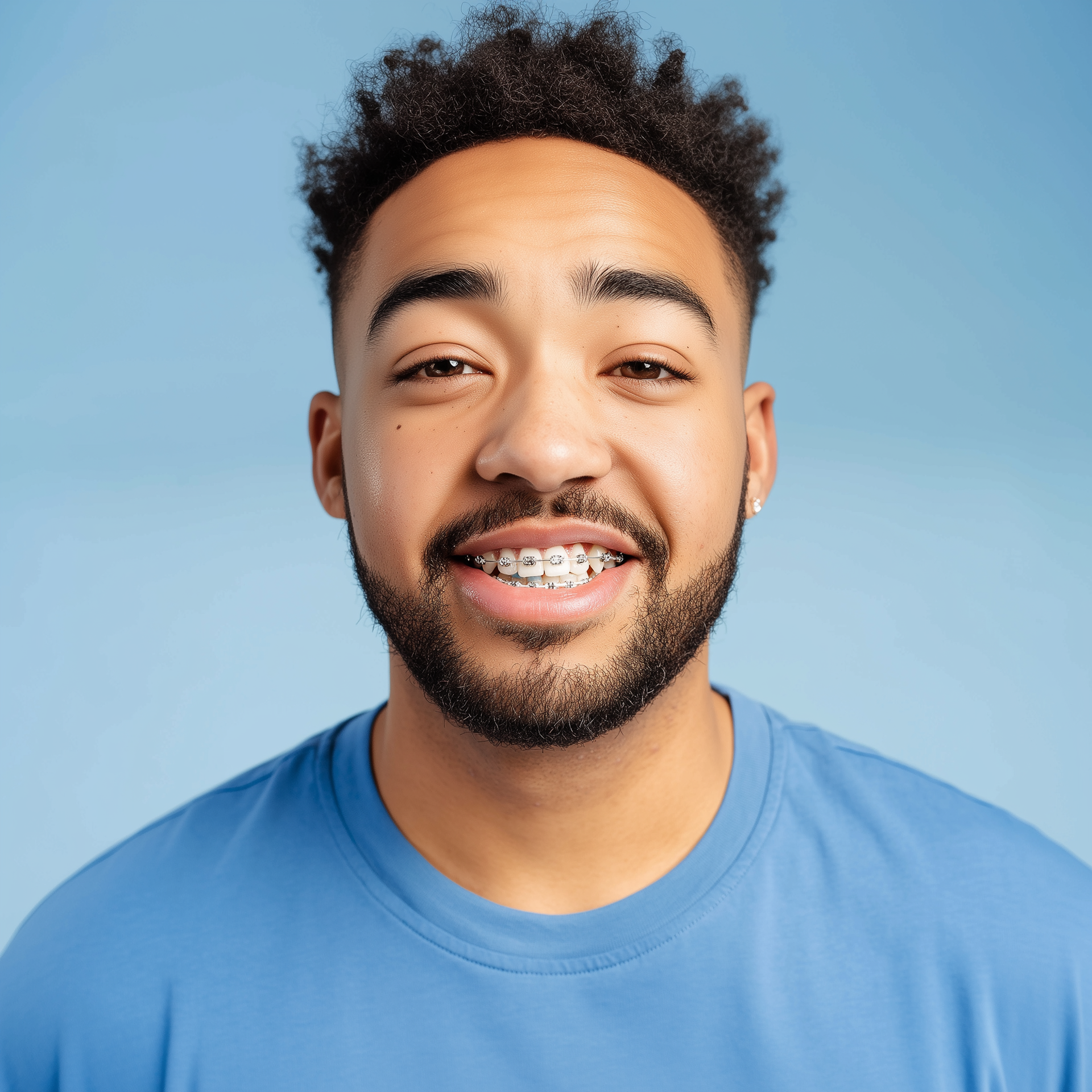
Traditional braces use three main parts that work together to move teeth gradually into better positions:
Brackets
Small metal pieces that are bonded to the front of each tooth. They act as anchor points for the wire.
Archwire
A thin metal wire that runs through all of the brackets and applies gentle, steady pressure to move the teeth.
Elastic Ties
Small colored bands that hold the wire securely in place against each bracket.
When the archwire is placed, it naturally wants to return to its original straight shape. That gentle pressure slowly and carefully guides your teeth toward their ideal positions.
Your orthodontist adjusts the wire periodically throughout treatment to keep progress moving. Between visits, the braces work quietly around the clock without requiring any effort on your part.
What Makes Them Reliable: Traditional braces work continuously and do not require daily decisions or removable parts. For many patients, that consistency is exactly what makes them the right choice.
Why Traditional Braces Remain A Trusted Choice
There is a reason traditional braces have been a staple of orthodontic care for so long.
They work. Reliably, predictably, and for a wider range of cases than almost any other option available.
Here is what patients and families appreciate most about traditional braces:
Proven effectiveness: Braces have been refined over decades and handle nearly every type of orthodontic correction effectively.
Works around the clock: There is nothing to remove, nothing to forget, and no daily wear time to track. Braces simply do their job.
Ideal for complex cases: For situations requiring precise tooth rotation or significant movement, braces offer a level of control that is hard to match.
Great for younger patients: Children and younger teens often benefit from a treatment that does not rely on daily self-management.
More comfortable than ever: Modern brackets are smaller, smoother, and more refined than the braces of earlier generations.
For many patients, these benefits make traditional braces the ideal choice regardless of age or case complexity.
Who Is A Good Candidate For Traditional Braces?
Traditional braces are one of the most versatile tools in orthodontics. They are a strong fit for a wide variety of patients and cases.
Here is a general picture of who tends to do well with traditional braces:
Children and teens who benefit from a treatment that does not require daily responsibility
Patients with more complex bite issues, rotations, or significant alignment needs
Patients who prefer a straightforward treatment option without removable components
Patients who want a time-tested approach with predictable results
Patients who appreciate the ability to choose colorful elastic bands for a personalized look
Of course, Invisalign and other clear aligner options, such as our exclusive, in-house Queue Aligners, are also excellent choices for many patients. The best way to know which treatment is right for your smile is to come in for a consultation and let Dr. Toothman take a look.
The Treatment Timeline: What To Expect From Start To Finish
Every orthodontic treatment plan is personalized, so timelines vary from patient to patient. That said, here is a general picture of what braces treatment looks like from start to finish:
Month 1: Placement And Adjustment
Your braces are placed during a single appointment that usually takes about an hour. You will notice some mild pressure and tenderness for a few days as your teeth begin to respond.
By the end of the first month, most patients have fully adjusted and find their braces feeling like a natural part of their daily routine.
Months 2 To 12: Active Movement
This is when the most noticeable changes happen. Your teeth gradually shift into better positions, and each adjustment visit refines the movement further.
Most patients visit our office every 6 to 8 weeks during this phase for routine adjustments and check-ins.
Months 12 To 24: Fine-Tuning
In the later stages, treatment focuses on refining the alignment and ensuring your bite comes together correctly. The progress is often less visible day to day, but equally important.
Completion and Retention
Once your treatment is complete, we remove the braces and fit you with a retainer. The retainer holds your teeth in place as the surrounding bone and tissue settle into their final positions.
Most patients wear a retainer every night long-term to protect their beautiful new smile.
What Your First Few Weeks In Braces Will Feel Like
The first few weeks in braces are the biggest adjustment. Knowing what to expect helps you feel confident from day one.
The First Few Days
You will likely notice mild soreness as your teeth begin to respond to the gentle pressure. Over-the-counter pain relievers can help, and the discomfort typically fades within three to five days.
Eating softer foods during this period makes things easier. Yogurt, pasta, mashed potatoes, scrambled eggs, and smoothies are all great choices.
Week One to Two
Your cheeks and lips may feel a little irritated as they adjust to the brackets. Orthodontic wax applied over any rough spots provides immediate comfort and helps the tissue heal.
Your speech may feel slightly different for a few days. This adjusts quickly, usually within a week.
Weeks Three and Beyond
Most patients are fully settled in by this point. Eating, speaking, and brushing all feel like second nature again.
Good To Know: The first week is almost always the hardest, and after that, things get significantly easier. If you feel uncomfortable in the early days, know that most patients adjust quickly and barely notice their braces within a few weeks.
Foods To Enjoy And Foods To Avoid During Treatment
One of the biggest lifestyle adjustments with braces is being mindful of what you eat. The good news is that most of your favorite foods are still on the menu, just with a few thoughtful choices.
Foods That Are Braces-Friendly
- Soft fruits like bananas, berries, and peeled apples, cut into pieces
- Soft breads, pasta, rice, and soft tortillas
- Eggs prepared any way you like them
- Yogurt, smoothies, pudding, and ice cream
- Tender meats that are cut into small pieces
- Most cooked vegetables
Foods To Avoid
Certain foods can damage brackets, bend wires, or get stuck in ways that make cleaning difficult:
- Hard candies and nuts that require heavy biting
- Sticky candies, caramels, and chewy sweets
- Popcorn, which has kernels that can get lodged under brackets
- Ice, which is one of the most common causes of broken brackets
- Crunchy chips, hard pretzels, and tough, crusty breads
- Corn on the cob, unless you cut the kernels off first
A little planning goes a long way. Most patients find that adjusting their eating habits becomes automatic within a few weeks.
Caring For Your Braces Every Day
Taking good care of your braces every day protects both your progress and your long-term oral health.
Here is what a healthy daily routine looks like:
Brush after every meal: Food particles can easily get trapped around brackets and wires. Brushing after eating helps prevent plaque buildup.
Floss every day: Flossing with braces takes a few extra minutes, but it is essential. Floss threaders or orthodontic flossers make the job much easier.
Use interdental brushes: These small, pointed brushes reach the tight spaces around brackets that a regular toothbrush cannot.
Rinse with fluoride mouthwash: A daily rinse helps strengthen your enamel and reach areas your toothbrush might miss.
Attend every scheduled appointment: Regular visits keep your treatment moving forward and help our team catch issues early.
Consistency matters more than anything else. A simple, dependable routine protects your smile throughout your entire treatment.
How To Handle Small Issues If They Come Up
A Wire Is Poking Your Cheek
Apply a small piece of orthodontic wax directly over the end of the wire. If you can gently push the wire back with a clean cotton swab, that works too.
If it does not improve within a day or two, give our office a call.
A Bracket Comes Loose
If the bracket is still attached to the wire, leave it in place and cover any rough edges with wax. Avoid hard and sticky foods until we can see you.
Contact Toothman Orthodontics to schedule a quick visit to have it re-bonded.
Soreness After An Adjustment
Some tenderness after an adjustment is normal and usually fades within a few days. Over-the-counter pain relievers can help, and soft foods are easier on sore teeth.
If the discomfort feels significant or lasts longer than expected, let us know.
Our Top Picks For A Smooth Treatment Experience
If you want your braces treatment to go as smoothly as possible, here are our top picks:
Stick with your hygiene routine every single day.
Keep orthodontic wax with you so minor irritation never becomes a bigger issue.
Skip the hard, sticky, and crunchy foods that can damage your brackets or wires.
Never miss a scheduled appointment, since consistency keeps your treatment on track.
Drink plenty of water throughout the day, especially after meals when you cannot brush right away.
Have an honest conversation with your orthodontist about anything that feels off. Small concerns handled early stay small.
Wear your retainer exactly as directed once treatment is complete. It protects everything you have worked for.
Why Maryland Families Have Trusted Toothman Orthodontics Since 1977
We feel truly fortunate that Maryland families have chosen our practice for over four decades.
Here is what patients share about what brings them to us and why they keep coming back:
A father-son legacy serving Maryland since 1977: Our practice was founded nearly 50 years ago, and we are honored to serve our community.
Platinum Invisalign Provider: Dr. Toothman ranks as the most experienced Invisalign clinician in the region, bringing that expertise to every treatment decision.
470-plus five-star Google reviews: The kindness of the words our patients share continues to humble us, and we never take that trust lightly. We are so grateful for our patients.
Two convenient locations: Frederick and Hagerstown, so families across Maryland have easy access to excellent care.
Full range of treatment options including traditional braces, Invisalign, and Queue clear aligners.
Personalized treatment plans built around each patient as an individual.
At Toothman Orthodontics, every smile is part of a legacy we have been caring for since 1977.
Conclusion
Traditional braces remain one of the most reliable and effective orthodontic treatments available. For many patients, they are the absolute best choice for creating a beautiful, lasting smile.
If you or your child is considering traditional braces, the next step is simple: come in and let us take a look.
Dr. Toothman will evaluate your smile, answer your questions, and help you understand exactly what treatment would look like for you.
We would love to meet you.
Schedule your free consultation today and take the first step toward a smile you will love for a lifetime.
Toothman Orthodontics
Frederick and Hagerstown, Maryland
Frederick: 301-662-3366
Hagerstown: 301-791-1770
Website: toothmanorthodontics.com
Frequently Asked Questions
How long does traditional braces treatment take?
Treatment length depends on the specific case. Most patients wear braces for 18 to 24 months, although simpler corrections can finish more quickly, and more involved ones may take longer.
Dr. Toothman will share a realistic timeline during your consultation once he has had a chance to evaluate your unique smile.
Do traditional braces hurt?
You can expect some mild soreness when braces are first placed and after each adjustment. That discomfort typically lasts three to five days and can be managed with over-the-counter pain relief and soft foods.
After the first few weeks, most patients do not notice their braces at all during normal daily activities.
Can adults get traditional braces?
Absolutely. Adult orthodontic treatment is very common, and traditional braces remain an excellent option at any age.
Dr. Toothman treats many adult patients and can walk you through all of your options during a consultation.
What foods should I avoid with braces?
Avoid hard foods like nuts and ice, sticky foods like caramel and chewy candies, and crunchy foods like popcorn and hard chips. These can damage brackets and bend wires.
Stick to softer foods, cut fruits and vegetables into smaller pieces, and you will be in great shape throughout treatment.
How do I brush and floss with braces?
Brush after every meal to remove trapped food and use an orthodontic floss threader or picks to reach between teeth around the wire. Interdental brushes help clean around brackets.
A fluoride mouthwash once a day helps strengthen enamel in hard-to-reach areas.
Does Toothman Orthodontics offer payment options?
Yes. We believe orthodontic care should be within reach, so we accept a wide range of insurance plans and offer customized monthly payment schedules to match your budget.
Our team will review every option with you during your consultation so that you have complete clarity on the path ahead.
Ready to Start Your New Smile Journey?
Click one of the options below for your FREE consultation!
Share this blog with someone!